
Stories of wrongful imprisonment often show situations of injustice, as well as resiliency and fights for freedom. That’s what a viewer can expect in “Belén,” which is set in Argentina.’
Camila Pláate plays Julieta in “Belén,” a woman who, after having a miscarriage in a hospital, is charged with having an illegal abortion, as well as homicide. The charges lead to her being sentenced to prison, with a limited defense by her public attorney.
Seeing issues with the case, lawyer Soledad Deza (Dolores Fonzi), decides to take up the case with plans to appeal the court’s decision. This is a difficult effort, as she and her team face fierce resistance in the press and judicial system. However, women start to rally when behind the cause when they learn the story of Julieta, who takes the alias Belén to protect her family.
“Belén” starts off in chaotic, distressing fashion as Julieta makes her way into the hospital in a panic, and in a quick succession of scenes, is arrested during a medical procedure. It immediately gets a viewer invested and concerned over her situation, knowing any legal action against her is wrong.
It’s a strong hook for the courtroom drama that ensues over the next hour and 45 minutes. Now, it’s true courtroom dramas have a tendency to be rather formulaic, and that is the case for “Belén.” The flick cinematically is fairly conventional in its approach.
However, what drives these types of movies is the subject matter at play and how it’s portrayed. It’s thankfully done well here, showing the cultural and legal forces working against Deza’s efforts. We get to see how the stress of the case impacts her at home, and how she builds a political movement with her crew while uncovering inconsistencies with the state’s case.
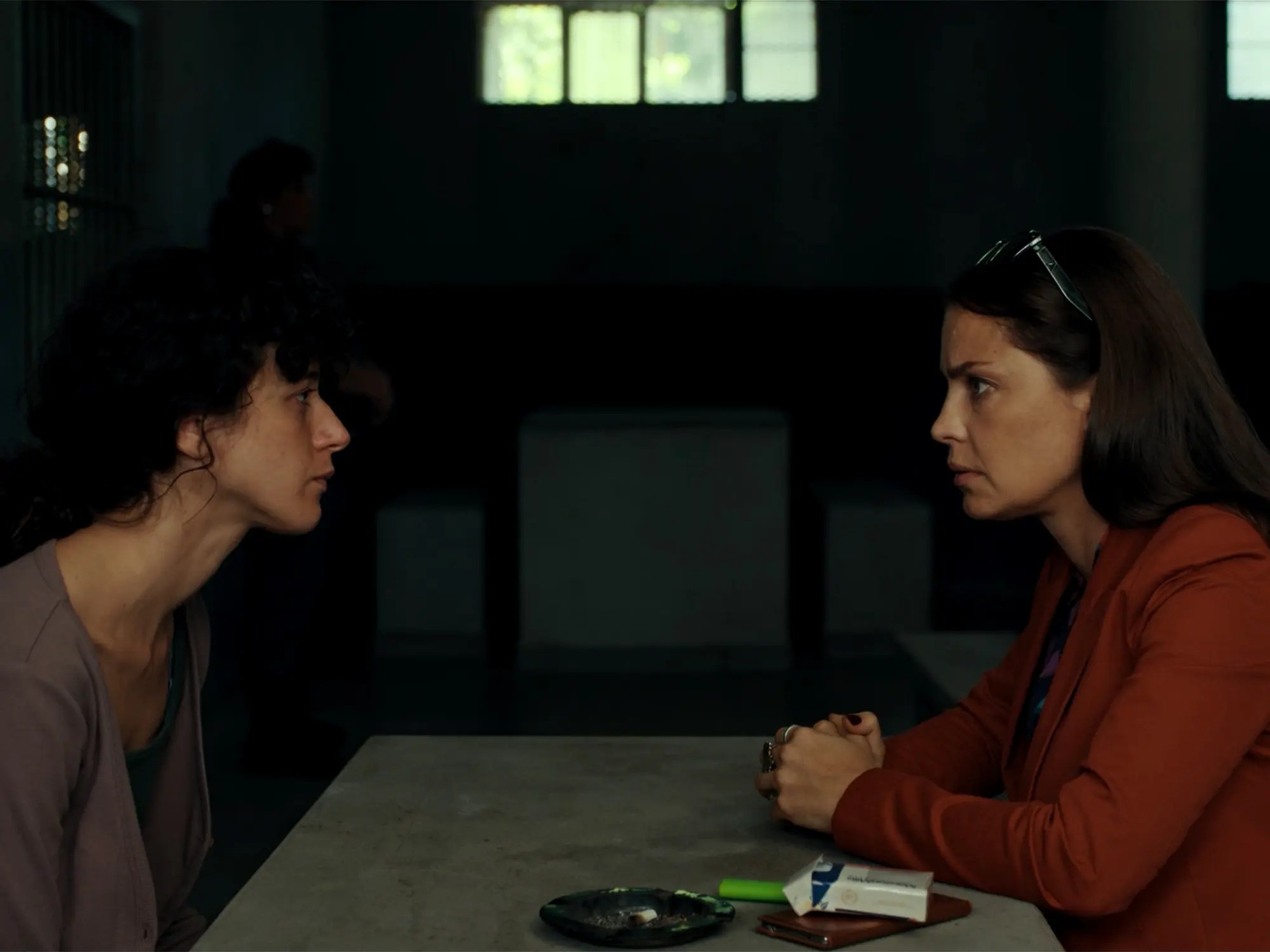
This is a bit of a double-edged sword, though. The movie’s focus on Deza’s work makes for compelling cinema. However, there isn’t as much attention put on the film’s titular character. Now, this could have been by design because the character in the film and the real woman she was based on wanted anonymity.
Yet as a viewing experience, this causes the film to be somewhat lacking. Plus, there are in fact some scenes showing her experience in prison. So some adding more about her experience in jail for two years could have compounded the struggle she and other women went through while the legal and public perception battles were taking place outside.
Fortunately, the actress playing Belén does solid work with the time she is on screen. It’s clear Belén is exhausted, exasperated and afraid, and Pláate brings all of that nicely to the forefront. Fonzi, who has more of the focus, is also really good in the lead role, capturing her character’s stress because of the hectic situation and commitment to justice.
Visually, “Belén” is not stunning, but it does have some strong artistry in important moments. The opening scene, for example, has a prolonged handheld, gritty appearance, playing into the turbulent situation. Sequences following Belén in prison, meanwhile, are appropriately dreary, displaying the difficulty the character is going through.
Though “Belén” has a fairly traditional courtroom drama route, the film’s portrayal of what the titular character went through and the effort to free her, which turned into a movement, is impactful. The picture also boasts a good, committed cast who all deliver. 3.75 out of 5.

 Matthew Liedke on Film