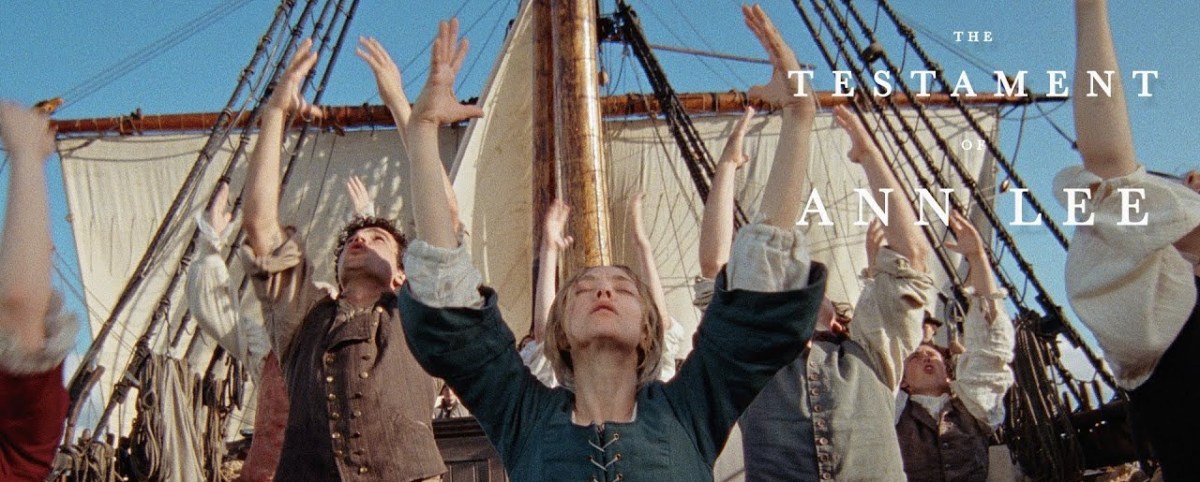
Amanda Seyfried is continuing to show she’s one of the best actresses working today with this flick, though one wishes the film around her was stronger.
“The Testament of Ann Lee” centers on its titular character, who founded the religious movement that became known as the Shakers. Ann’s story began in England during the 18th century, where, after several miscarriages and stillbirths, she leaned heavy into faith.
This led to her receiving a vision, which resulted in her taking over a religious group that prayed through continuous movements and shakes. Additionally, knowing what happened with her pregnancies, she makes a decree barring intimacy, seeing it as the ultimate sin.
Part musical, part historical biopic, “The Testament of Ann Lee” is a film with quite a bit of intrigue, but doesn’t end up following through as a deep exploration of the religion as a whole. While its two hour and 10 minute runtime never overstays its welcome, the film is also never truly gripping from start to finish.
It’s true that the film injects some uniqueness because of the dance-like movements and musical set pieces. But it still plays out as a rather straightforward recap of how the Shakers dealt with persecution while relocating from England to the American Colonies.
The film just seems to lack a critical edge to its portrayal of the religion as the film goes on. That’s not to say it needed to be a completely cynical or a mocking portrait. However, there are several aspects of the Shakers movement that seem very cult-like, from a leader who elevates themselves with claims of being chosen, to rigid standards that drive wedges between family and community.
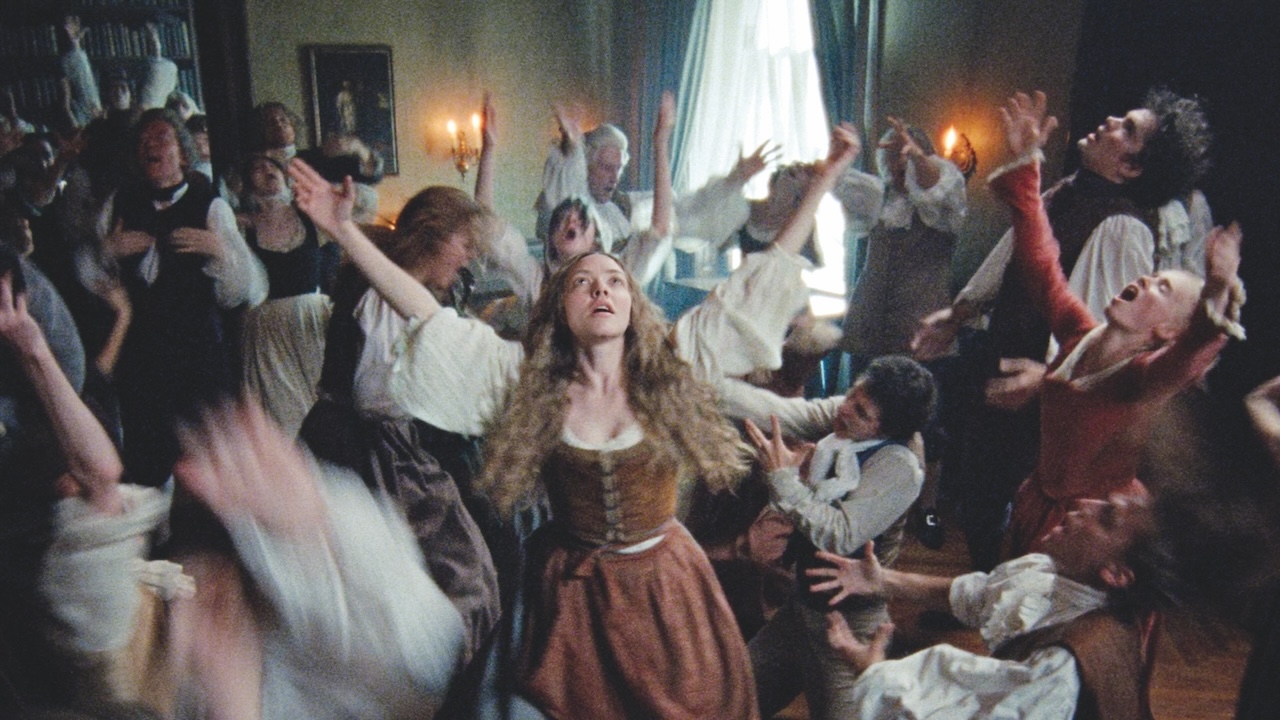
At times the film just seems like a neutral observing historical account of the Shakers faith. Which is fine as a period piece recapping events. Plus, as previously stated, there’s some added personality to the picture with its musical moments. However, it also doesn’t quite reach the heights of other flicks that have explored religion.
Fortunately, the movie does have an ace up its sleeve for overall quality in the form of Seyfried, who is spectacular on screen in the feature. She’s proven herself in cinema and on TV with the likes of “First Reformed,” “The Dropout” and “The Crowded Room,” and she once again establishes herself as a dynamic actress here.
Seyfried is superb at portraying Ann’s extreme grief after several failed pregnancies that ended in tragedy, and then convincingly shows the character’s resolve in moving forward. Seyfried displays how the character took charge, driven by faith and vision, and how it kept her standing for her movement against headwinds.
The supporting cast, which included Lewis Pullman, Thomasin McKenzie and Christopher Abbott, is all quite good on screen, too. Though, one wishes the film in the latter half dug more into the lives of other members in the religion and their feelings toward the rules.
Mona Fastvold, who in the past wrote the strong 2019 film “The Mustang” and 2024’s best movie “The Brutalist,” has a fine biographical period piece with “Testament of Ann Lee,” which she directed. However, it doesn’t dig as deep as it feels like maybe it could have, making it feel somewhat surface level, even with the musical element. Seyfried certainly deserves credit though for a lot of heavy lifting. 3.25 out of 5.

 Matthew Liedke on Film
One thought on “REVIEW: Seyfried shines in Ann Lee’s mixed ‘Testament’”