
Two decades after playing the editor of a print outlet in 2003’s “Shattered Glass,” Peter Sarsgaard has returned to journalism cinema, now leading a broadcast team.
Like the aforementioned film, Sarsgaard plays a real-life figure here, this time Roone Arledge. News isn’t Arledge’s first focus, though, as his main priority is helming ABC Sports’ coverage of the 1972 Olympics in Munich, Germany.
Arledge and control room producer Geoffrey Mason (John Magaro) are forced to take up the news mantle, though, as the 1972 terrorist attack begins to unfold. Over the course of the next several hours, the ABC team has to adjust and adapt on the fly to cover the increasingly dangerous situation.
There have been many great journalism flicks over the years and “September 5” can certainly join that club. However, while other notable movies such as “All the President’s Men” and “Spotlight” are investigatory procedurals, this new movie feels much more like a “day-in-the-life” type of production.
It’s a sort of hands-on, crash course experience, where an audience sees in real time the actions of a broadcast news team covering a live crisis. It makes for a captivating, fast paced watch, as a viewer witnesses the crew have to make quick decisions, get creative, and tell an unfolding story with as much accuracy as possible despite the chaos.
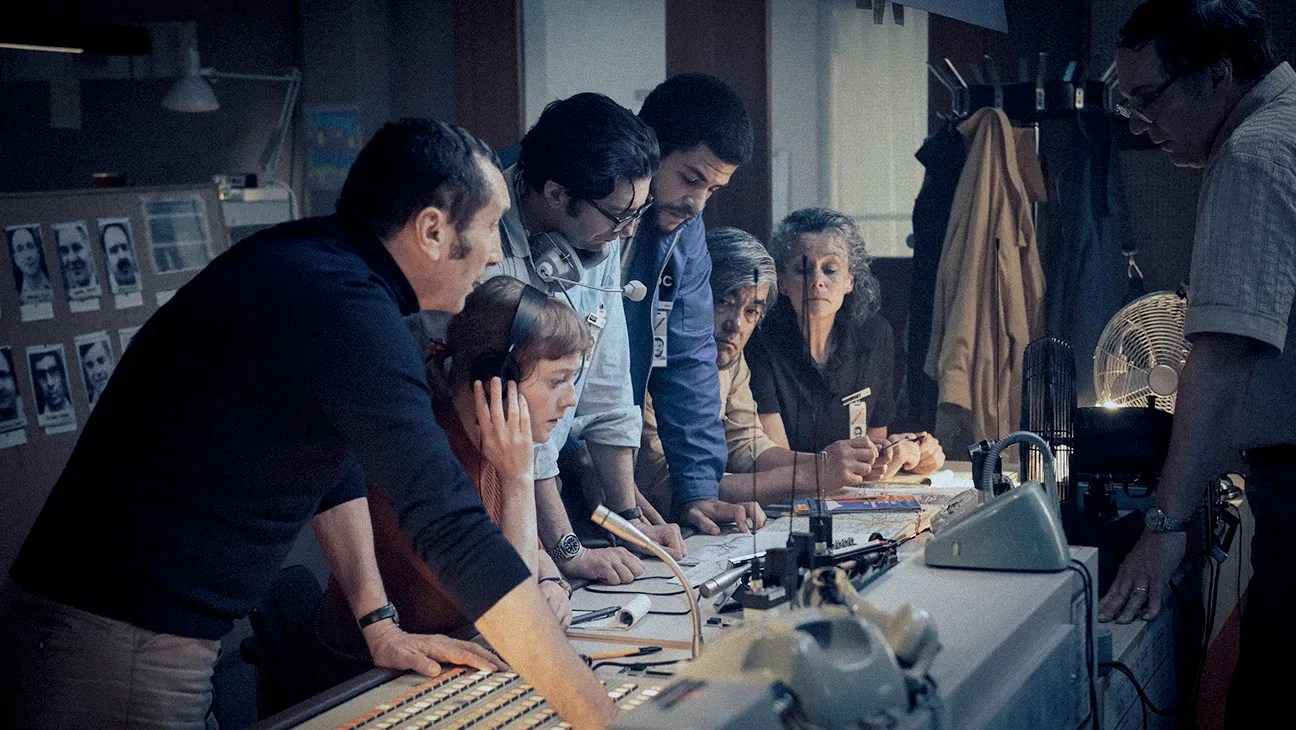
Having been in a newsroom when big stories break, I can attest to there being a lot of organized chaos. Director Tim Fehlbaum really manages to capture that here, as reporters on the ground and workers in the control room are constantly making calls, following what’s happening on their cameras and getting the latest information to anchor Jim McKay, who’s shown through archive footage.
It’s an exciting hour and 35 minutes with something going on in every frame. It’s wonderfully put together from an editing standpoint, the flow from shot-to-shot and scene-to-scene is impeccable, keeping up the momentum and giving a viewer a sense of everything the crew is handling.
Speaking of the crew, the acting is exceptional across the board. Sarsgaard excels as Arledge, who is thrust into a different kind of leadership role than he’s used to. Mason, meanwhile, is a character who’s been looking for a chance to prove himself and gets his big shot here, and Magaro is stellar at showing how the man went into producer mode with telling the story right as his only goal.
The rest of the cast is really solid, too. Leonie Benesch is effective as Marianne Gebhardt, for example. Gebhardt works as ABC’s German translator, and Benesch has to portray the character’s journalistic professionalism, while also capturing the woman’s turmoil over another tragic situation unfolding in her home country just under 30 years after the end of WWII.
Benjamin Walker also deserves credit for playing reporter and longtime ABC News anchor Peter Jennings. He is impressive at portraying Jennings as the focused, committed reporter he was, and not just doing a simple impression in a few scenes.
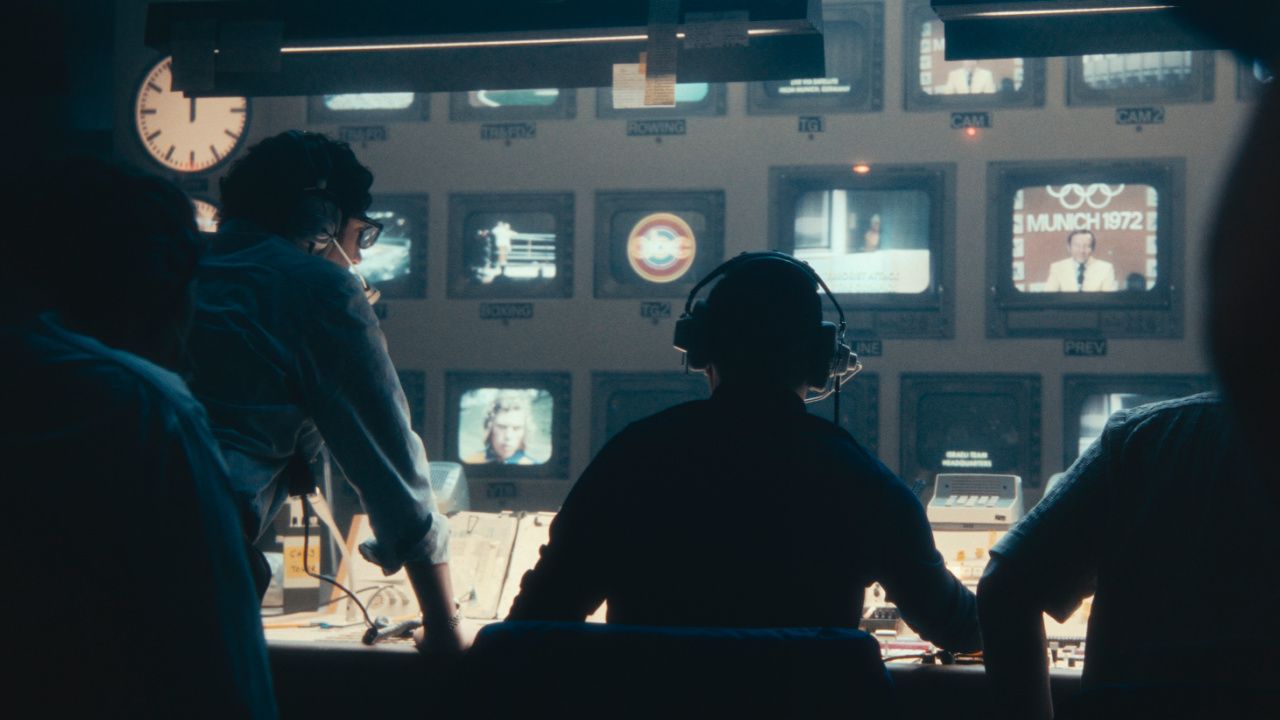
Speaking of, another impressive point with “September 5” is how it displays all of the work the team does to make the broadcast go on. This includes moments where pictures of the hostages are developed and brought to the television screen, as well as the various graphics quickly created. It’s good when a film like this takes the time to show the meticulous intricacies that go into a craft.
What detracts somewhat from “September 5” is a notable effort to keep discussion of the broader politics of the attack at a minimum. A character even says something along the lines of “we’re here to cover the situation as it happens, it’s up to the news branch to explain it.”
It’s understandable that the filmmakers wanted a straightforward film about how a sports crew had to flip to breaking news, but it’s still noticeable how light the film is in addressing the geopolitical events leading up to 1972 and the implications of the attack in Europe and the Middle East. It’s even more noticeable today with the current conflict in Gaza.
Another issue is how the film stays almost entirely within the control room. Again, one can tell what Fehlbaum and Co. are going for here, in trying to put a viewer in the shoes of those in the control room, who are doing what they can, but are themselves observers. Yet there are some times where it would have felt right if the audience could have the perspective of some of the field reporters.
Even with all that being the case, though, “September 5” is still a really great film. It could have been rounded out a bit more, but it’s still one of the best of the year as it is. The acting, editing and cinematography are all finely done. 4.85 out of 5.

 Matthew Liedke on Film