
The World War II era was a period with many stories of bravely doing what’s right, on and off the battlefield. This film centers on one of the latter stories.
Anthony Hopkins portrays British man Nicholas Winton, who’s cleaning out paperwork in his home office and finds several old documents that he’s kept over the years. The documents are from his time with a British committee tasked with evacuating refugees from Czechoslovakia.
The film then goes back to a younger Winton in the late 1930s where he is portrayed by Johnny Flynn. The movie shows the effort by Winton and others in the committee who worked night and day to get political refugees and Jewish children out of the area as the German invasion grew closer.
Movies like this are a real reminder of just what a gargantuan effort it was by so many to overcome the Axis powers during World War II. When one watches this film, it provides a real sense of appreciation to the many people who, even if they didn’t go to battle in either theatre, contributed greatly to efforts to help win the war, and/or rescue those facing persecution and genocide.
The film’s dramatization of Winton’s commendable efforts of fundraising and work with government agencies to create safe passage to the United Kingdom is inspiring. Additionally, the film rightfully shows that it was very much a collaborative process, with many people on the ground in Czechoslovakia and in London doing heavy amounts of work.
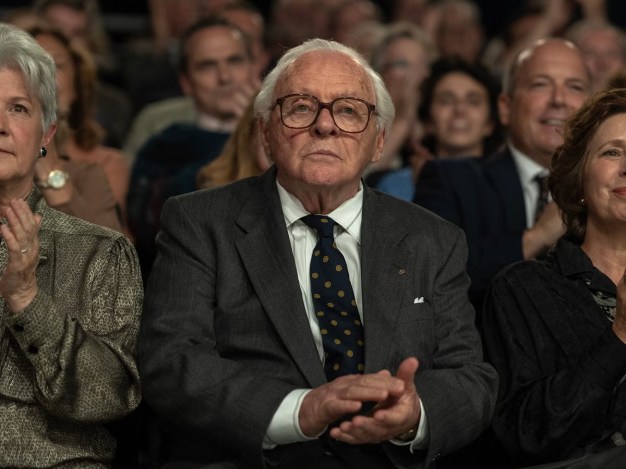
Moments in Winton’s later life, meanwhile, showcase the lingering impacts of those events in emotional fashion. These scenes, especially near the end, are powerful in displaying the results of the labor done by Winton and his colleagues.
While the film is definitely stirring and emotionally-charged, though, the quality of the picture leaves a bit to be desired. The movie is very conventionally structured and shot, leaning more toward a TV movie look than a feature studio release.
This doesn’t detract much from the film’s enjoyment, but there isn’t enough style to enhance it either. So, it falls short when compared to other films depicting the era, such as “Schindler’s List,” “The King’s Speech” and last year’s “Zone of Interest.” The transitions to past and present could have been better timed, too.
Acting-wise, a lot of the attention will go toward Hopkins, and rightfully so. The actor, as usual, brings a powerful gravity to the screen, especially toward the end during the picture’s moving moments. At the same time, Flynn deserves credit, too, for playing the younger version.
He doesn’t try to pull off a copy of Hopkins as he is now or was in the past, but instead just captures the essence of the character, and he’s successful. He is believable as an ordinary, but committed man trying to do what’s right. The supporting cast, including Helena Bonham Carter, Romola Garai and Alex Sharp is also serviceable.
“One Life” is an effective matinee biopic. It’s not an award caliber work like others set in this period, but it still tells an important story well enough to be worth checking out. It’s also assisted by a performance by one of our greatest actors. 3.5 out of 5.

 Matthew Liedke on Film
Fantastic review. This is one of my most anticipated movies of the year. The true story is in and of itself fascinating. However, the main draw for me is Sir Anthony Hopkins. Despite reaching an age of retirement, Hopkins has proven he hasn’t lost his abilities to engage. Recently, I was really moved by his outstanding Oscar-winning performance in “The Father”. If this film is anything like that one, I know I will love it. Here’s my review of “The Father”: https://huilahimovie.reviews/2021/04/04/the-father-2020-movie-review/
LikeLike