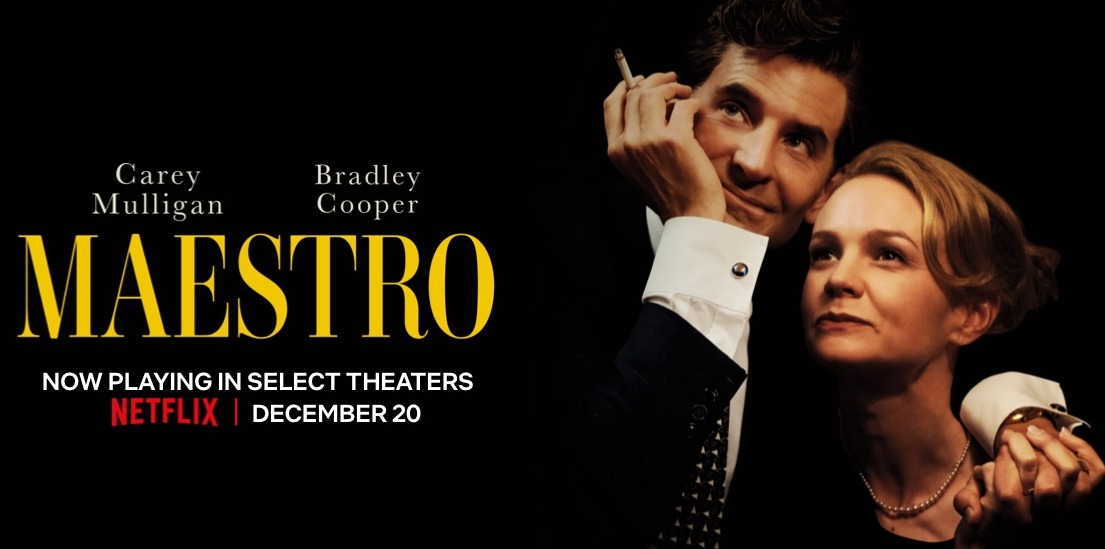
Bradley Cooper has returned to the directing chair and once again put together a film revolving around a musician.
Unlike “A Star is Born,” though, his latest picture is about a real person. “Maestro” is a biographical film about Leonard Bernstein, who Cooper also portrays. Bernstein had an illustrious career as a composer and conductor in various capacities, including film and orchestras.
While the movie covers his professional background, though, the movie is much more centered on his relationship with his wife, Felicia Montealegre Bernstein (Carey Mulligan). The film shows how they became a couple and how their marriage was strained by Leonard’s work and his affairs.
“Maestro” was a bold project for Cooper and it’s definitely a commendable effort by the burgeoning director. With that said, it falls short of greatness, for a couple of reasons. The first issue is the first half of the movie.
Taking place in black-and-white and with a 1:33 aspect ratio, which is a smaller, box-like frame, Cooper brings a lot of style to the first part of “Maestro.” There’s certainly artistry on display.
However, narratively, it’s all over the place. The movie gets started rather abruptly and bounces around to several points of Bernstein’s life, covering both his career success and relationship with Felicia. It does so way too fast, making for a rushed experience.
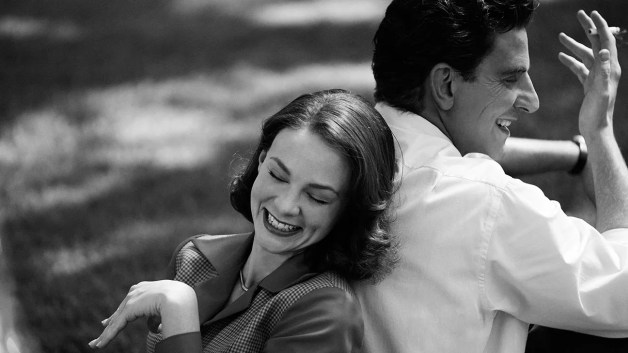
It comes across as frantic and frenzied, as if Cooper wanted to capture the old Hollywood feel of the time, as well as Bernstein’s musical, spontaneous nature. But in doing so, the film has no time to breathe and provide proper insight.
That lack of insight leads to the second problem. Even in the latter half, “Maestro” doesn’t create a well-rounded enough portrait of who the man truly was. We as the audience see his magnificent abilities as a musician on display, and learn of his true love for Felicia.
However, the influences of his art, his life as a bi or gay man, his own inward thoughts about his sexuality and his views toward the issue socially were either footnotes or missing. With that said, the parts of his life that are featured are well done, especially in the second half.
Around the mid-point, the movie switches to color, the aspect ratio adjusts to a wider format and the film slows down a bit to allow for deeper, more prolonged character moments. In the second half, the viewer is more drawn in by the drama as the relationship between Leonard and Felicia evolves and becomes strained.
Seeing the two grow apart because of Leonard’s affairs and career and then come back together because they rely on each other and have a need to be together is endearing cinema that keeps a person hooked. It’s certainly aided by the performances, too.
Cooper is on his game here, clearly having done his research to recreate Bernstein’s manner of speaking, as well as his caring personality and his promiscuous side. However, he is completely overshadowed by Mulligan, who gives an elite performance as Felicia.
She is absolutely on fire in the role. She captures her character’s fascination and love for Bernstein, as well as her hurt and conflicted feelings regarding their complex relationship. Every time she is on screen she steals the show.
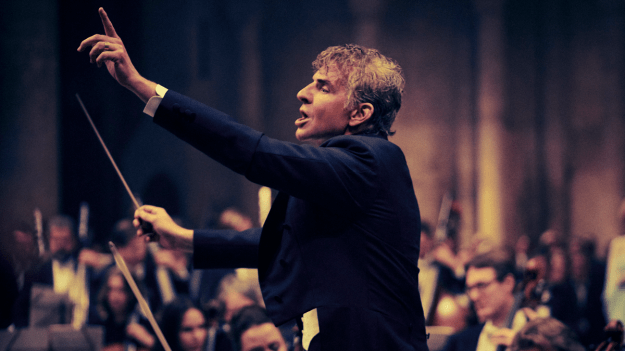
The level of filmmaking is on point, too. Cooper showed in “A Star is Born” that he knows how to make musical moments feel cinematic and it’s true in “Maestro as well. There’s a scene with a musical performance taking place in a cathedral concert hall that is absolutely breathtaking. It’s no doubt one of the best scenes in a movie this year.
“Maestro” looks and sounds really good, plus it boasts a cast that provide strong performances including an Oscar-worthy one from Mulligan. However, it also leaves a person wanting more and the first half of the film is too scattered narratively. 3.65 out of 5.

 Matthew Liedke on Film
One thought on “REVIEW: While not a masterpiece, ‘Maestro’ remains a strong biopic”