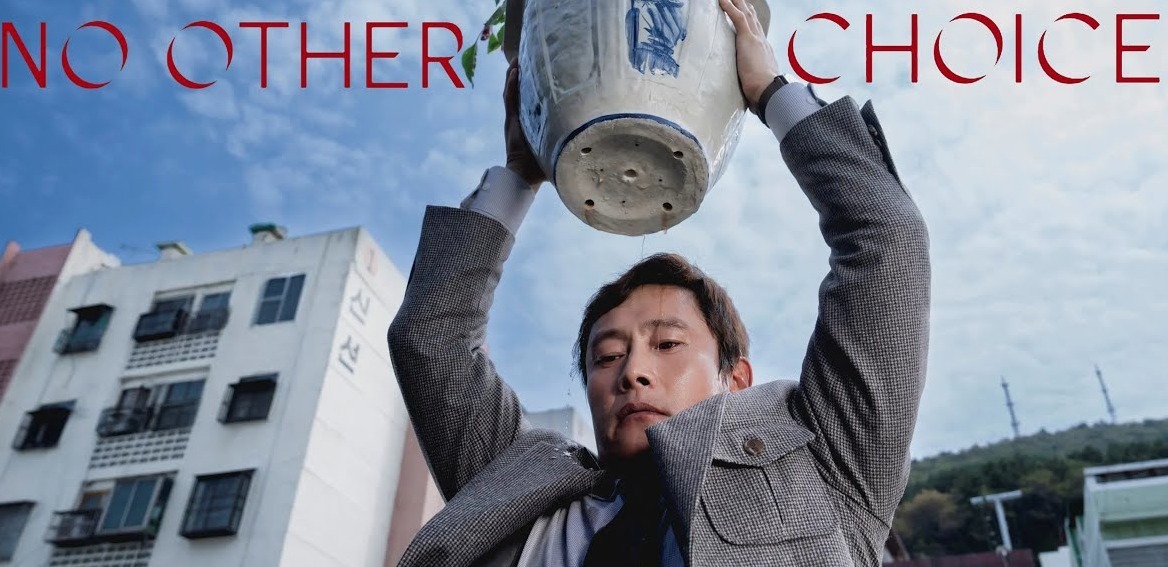
I know job hunting can be tough sometimes, but, yeesh.
That’s mainly what the lead character is going through in this new dark dramatic comedy from South Korean director Park Chan-wook. The film stars Lee Byung-hun as Yoo Man-su, a blue-collar paper factory worker who seems to have everything.
He lives in his childhood home he bought back, has achieved a solid middle-class status, and supports his wife Lee Mi-ri (Son Ye-Jin), as well as his two children and twin golden retrievers. That all changes when he, and several others are laid off from the factory. It leads to months of unemployment, hard times, and desperate decisions for the movie’s protagonist.
I grew up in a small Midwestern factory town in northern Minnesota, which has a paper factory of its own, with a fair share of labor history. In 1984, a few years before I was born, a division of the mill there shut down, right before Christmas to boot, and left hundreds without jobs.
A few years later, in 1989, for an expansion of the mill, the factory owners used non-union workers, and a strike began, which then turned into a riot. In more modern times, in 2013, just a year after I graduated college and began working as a reporter, the factory again made a move, cutting 265 jobs.
To say this movie struck a nerve is an understatement. But this is a picture that is accessible to really most audiences.
Layoffs have personal, familial and communal ripple effects, which are shown in this movie in a way that feels so universal and impactful. In fact, most who’ve gone through difficult job hunts, a common thing whether you’re in South Korea or the United States after the Great Recession, can relate to “No Other Choice.”

Of course, that’s not to say most people will do what the main character in this film actually does. Chan-wook, who also co-wrote the film as an adaptation of an American novel, “The Ax,” takes viewers on a positively wild ride, with the plot thickening several times as Yoo Man-su becomes frantically more daring in his attempt to gain employment.
However, there are several true themes thoroughly explored in the picture, from layoffs, to the rat race of competitive job hunts and the availability of jobs overall with advancements in automation. The way these elements tie into life at home is also incorporated, making for a film rich in socioeconomic commentary.
Perhaps most astonishing is how seamlessly Chan-wook and the rest of the creative team blend tones while digging into these topics. The film, at times, is wildly funny, producing several laugh-out-loud moments, and these can happen fast after something macabre or suspenseful just took place. It never feels jarring, with every beat flowing naturally into the next without a hitch.
It’s a picture that keeps one guessing, too, leaving a person on the edge of their seat heavy with anticipation for what happens next. The situation for Yoo Man-su is constantly taking exciting turns, impacting the lives of his family and others around him, making the experience all the more captivating.
Yoo Man-su is a fantastic protagonist to follow, too. He’s a man who’s going in two directions, as he’s on a downward spiral of sacrificing ideals and morals, and doing so all to rise up economically for the sake of him and his family. It’s a compelling journey, and it certainly helps in having a spectacular performance from Lee Byung-Hun.
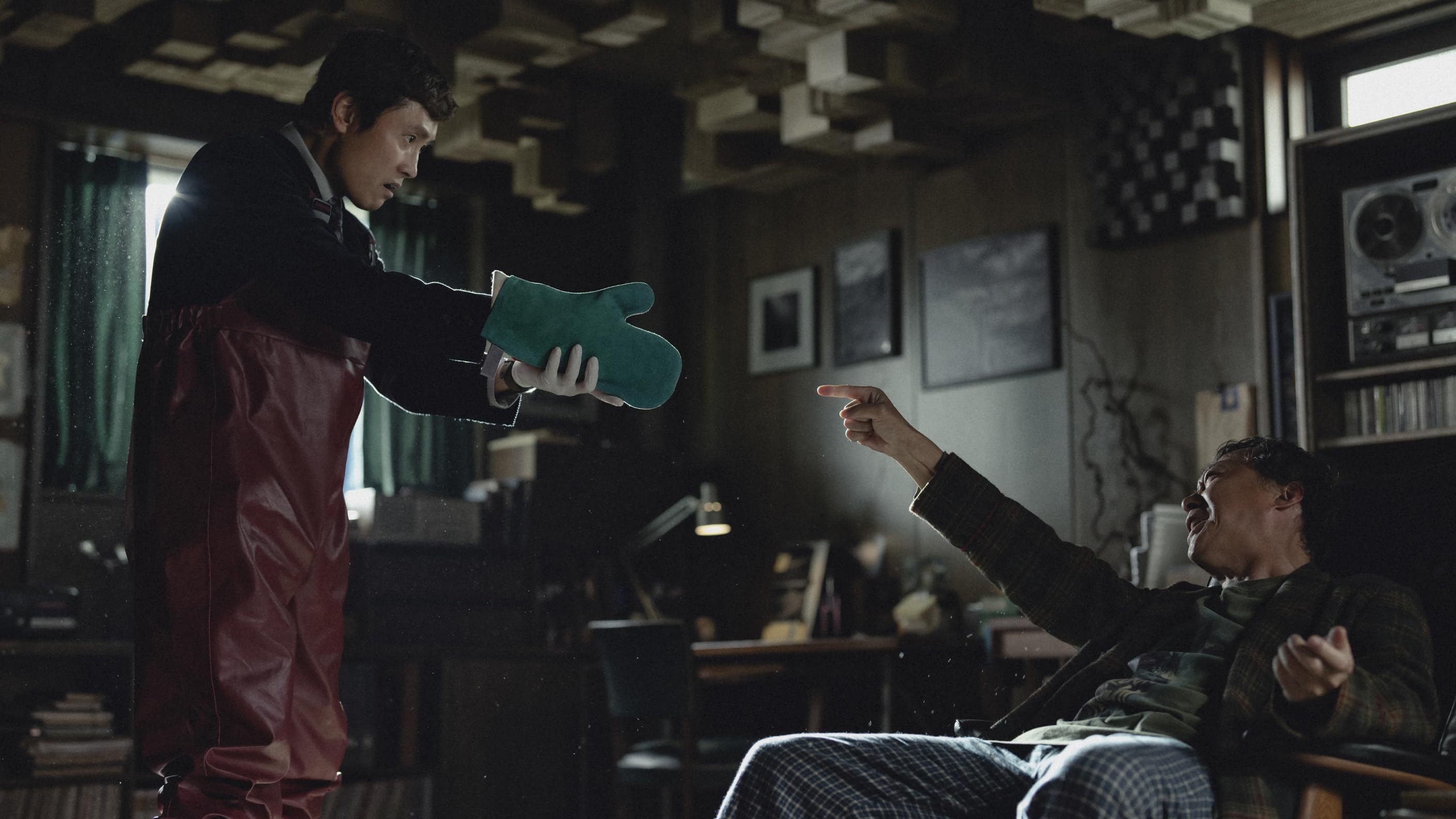
In moments showing his character’s anxiety, desperation and general demeanor in trying to keep it together as things get more intense, Byung-Hun is powerful. From start to finish, he is fantastic in showing the evolution of his character.
The film’s supporting characters are really essential, too. There’s another couple in a troubled spot that are pretty important to the film’s second act, and they’re great. The big side standout, though, is Lee Mi-Ri, the wife of Yoo Man-su, portrayed by Son Ye-jin.
The character is clearly being strained, wanting to support her family but also frustrated with her husband, and Son Ye-jin is fantastic at showing this. Yoo Man-su and Lee Mi-ri just have a great dynamic, too. Many of their scenes together really empower the experience.
“No Other Choice” also is full of technical artistry, too. The film is phenomenally well edited and consistently features wonderful cinematography. From the camera slowly following the action to remarkably framed, lingering shots, the film has flair and a visual energy that matches the movie’s vibe.
“No Other Choice” has a wealth of reasons to watch. Chan-wook and Co. put together an engrossing, narratively fulfilling, exceptionally well-acted movie with striking commentary on the desperation that can result from capitalistic pressures. 5 out of 5.

 Matthew Liedke on Film
One thought on “REVIEW: ‘No Other Choice’ is an absolutely brilliant black comedy”