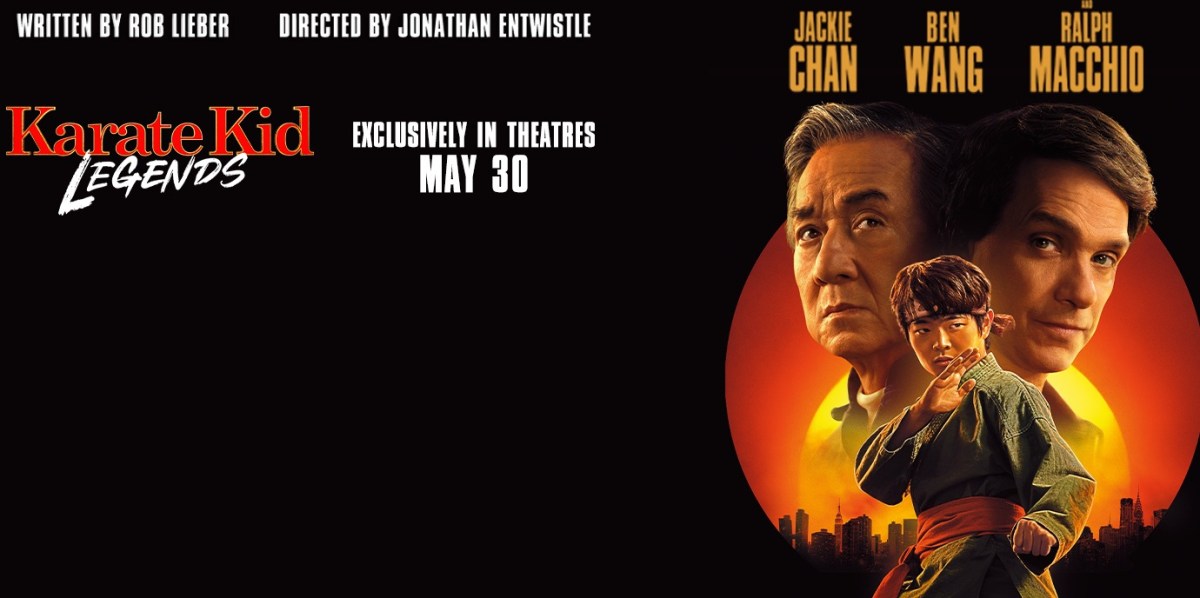
This movie has a lot of cliches and more cheese than the pizzas prominently featured throughout, and damn if it can’t win a person over.
The latest film in the franchise features a new titular Kid. This time around its Li Fong (Ben Wang), a former student of kung fu teacher Mr. Han (Jackie Chan) from the 2010 film. Li now finds himself a new resident of New York City after moving there with his mother.
After moving, Li makes friends with a pizzeria owner, Victor (Joshua Jackson) and his daughter, Mia (Sadie Stanley). Li came to NYC vowing not to fight again after a family tragedy, but when Victor is injured and in need of money, he decides to enter a martial arts competition. Mr. Han comes to help train the student, and enlists karate expert Daniel LaRusso (Ralph Macchio) to assist.
“Karate Kid Legends” feels very familiar to those who’ve watched the previous installments. There’s a young character who is in a rough spot after a major life change, and then they meet a potential love interest who has a connection with a bad kid who knows martial arts. That leads to conflict which eventually leads to a showdown after some training.
The blueprint used before is used again this time around. Yet, it happens to work, for a few reasons. One, the introduction of Victor’s character arc for the first half of the flick works to the movie’s advantage.

Seeing Li, who has some fighting knowledge, help the pizzeria owner get back in boxing shape to compete in a local bout for some cash is a nice addition to the formula and builds a lot of personality for its lead characters. The audience gets attached to them, and it makes us as viewers want to root for them.
There’s also a benefit of Li having some marital arts knowledge, which means he’s not having to begin training from scratch. He has an established relationship with one of his trainers, Mr. Han, and he understands the “arts” in the phrase martial arts, so-to-speak. It means when the time comes, his character can get into the plot of the second half in a believable, cohesive way.
What’s not as cohesive is how they rope LaRusso in. His character isn’t really needed for the film when all is said and done. However, his inclusion is a fun way to tie the franchise together, and isn’t any reason to complain. It’s enjoyable watching him banter with Han and blend his style with kung fu.
There are issues that are worthy of complaints, though. The biggest is the runtime. The original “Karate Kid” clocked in at 127 minutes. Its remake in 2010 was 140 minutes. “Legends” only comes to 94 minutes. Does a “Karate Kid” necessarily need to be over two hours? Not necessarily. But only an hour and a half? It’s simply not enough time.
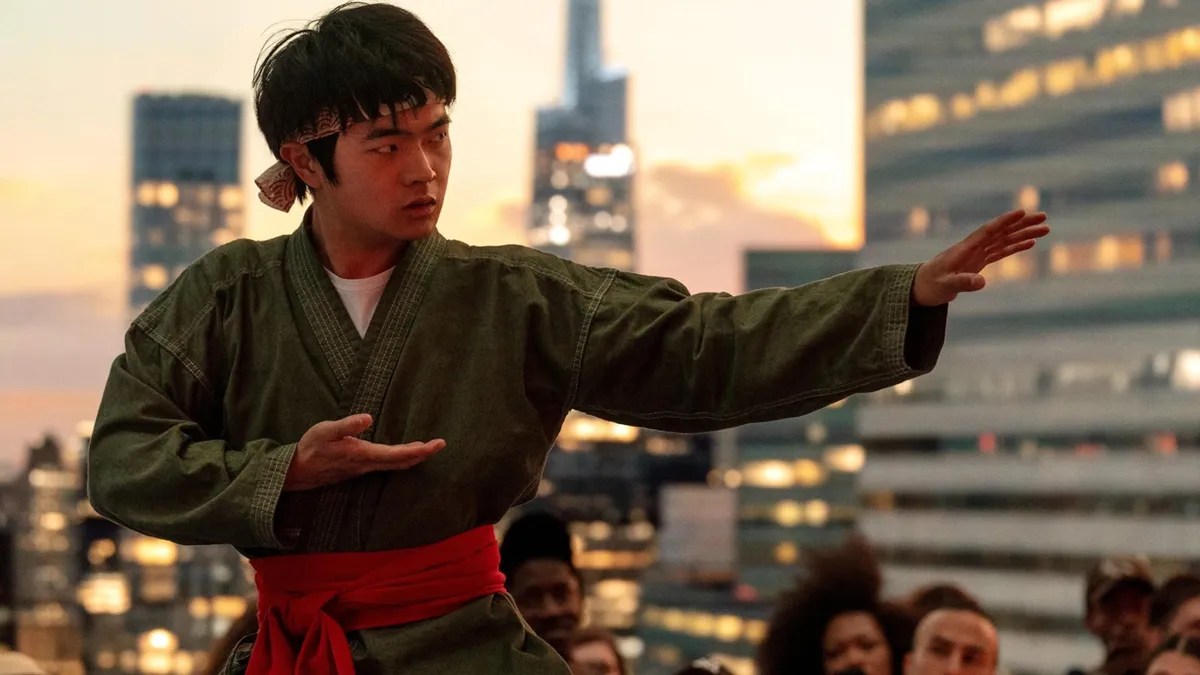
All of the stuff an audience comes for is in fact there. We get to see the development of the protagonist, the romance with the love interest, the training and the fights. However, there are other elements that are woefully underdeveloped here.
Li’s relationship with his mom is meant to be one of the emotional anchors of the film, yet it doesn’t get nearly the screentime it deserves. The moms in the original and the remake both had much more dialogue and developed personalities.
In this film, Li’s mom doesn’t even have a first name, she’s just Dr. Fong. For much of the film she’s uptight and strict with few conversations to show her coming to a deeper understanding of her son. The movie’s villains have a similar issue as well.
Li’s chief rival, Conor Day (Aramis Knight) has little screentime other than scowling and training, and the same is even more true for his sensei, O’Shea (Tim Rozon). An extra 20 minutes would have been really beneficial to give both the villains and Li’s mom additional character beats for a more well-rounded cinematic experience.
What does add to the cinematic experience is the fighting, though, which is really entertaining. From a back-alley fight, to Victor’s boxing match and then the final tournament, all of the combat looks great. The alley fight is especially good, as Li utilizes the sort of make it up as you go/use your surroundings style that Chan is well known for in his filmography.

The tournament bouts are awesome, too, with Li incorporating both Japanese karate and Chinese kung fu for a blend of styles which makes for exciting moves. There are some wicked athletic kicks at play that will have a viewer cheering.
The film also has a real personality, both in terms of sound and visuals. There’s a real hip hop vibe at play in the music that enhances the picture. There are also graphics on screen showing how many days until the tournament, as well as fight points and round numbers, which is reminiscent of the “Street Fighter” game franchise, giving it a distinguishable on screen identity.
The main roster of good guys is really likable, as well. Wang is quite satisfactory as the young Li, a teenager still trying to get over a tragedy while still having his own form of confidence and attitude. Like other protagonists in the series, he’s an underdog who a viewer can relate to and support fully.
The same is true for Victor and Mia, who are both really amiable. There’s a real ‘been around the block’ vibe with both characters, in that they feel really real and grounded, on top of their charm. Additionally, it’s a treat seeing both Chan and Macchio share the screen, and not only train as dual teachers, but show off their own skills together in a great little fight scene, too.
“Karate Kid” legends may be cliched and lack enough time to really develop a few important characters. However, like its 1984 and 2010 counterparts, it has it where it really counts. Most importantly, it has plenty of heart. It’s not the best in the franchise, but it is still a winner. 3.9 out of 5.

 Matthew Liedke on Film