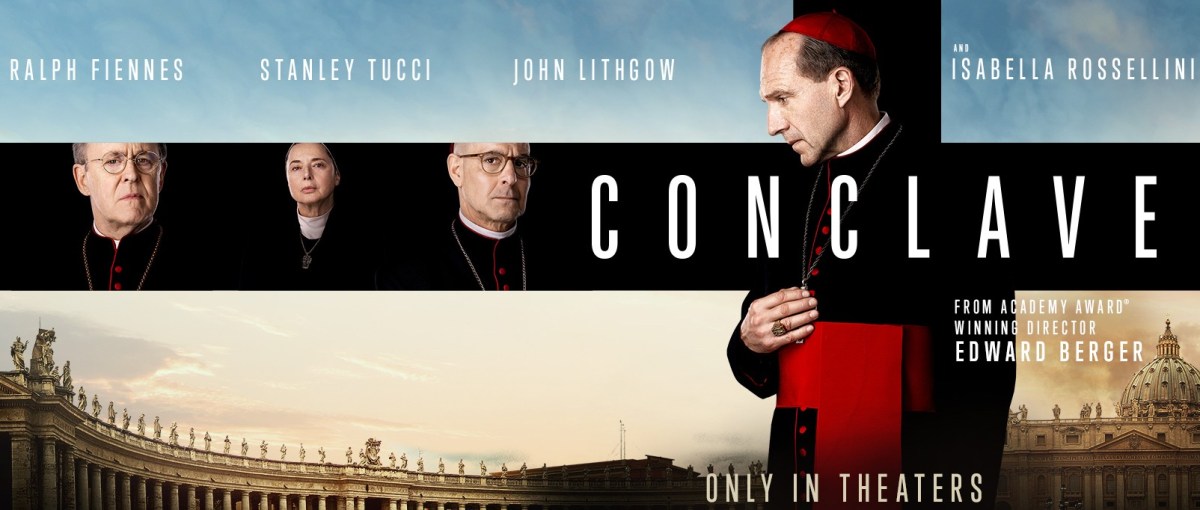
Come for the papal politics, stay for the drama.
“Conclave” was directed by Edward Berger who helmed the Oscar-nominated film “All Quiet on the Western Front” in 2022. Set in present days, the film centers on the death of a fictional Pope and the subsequent voting process to choose a successor.
Leading the process is Cardinal Thomas Lawrence (Ralph Fiennes), who oversees the rules and schedule. Over the course of several days, Lawrence is roped into several ongoing political situations as Cardinals Bellini (Stanley Tucci), Tremblay (John Lithgow) and Tedesco (Sergio Castellitto) vie for power.
As a non-Catholic heathen, it’s easy to look at “Conclave” and feel like the stakes are low. Movies about struggles with faith, and religion’s impact on the human psyche can make for interesting cinematic experiences, with a great example being “First Reformed.”
Films about the power of religious institutions and its impact on the world can also be great dramas, as seen in “Spotlight.” However, the inner-workings of the Catholic Church at first glance seems like something that would only be compelling to, well, Catholics.
To the credit of Berger and writer Peter Straughan, though, “Conclave” is largely captivating. The selection of a new Pope may not be something that effects the everyday lives of those not in the church, but the infighting, dealmaking, even the pomp and circumstance, makes for a lot of entertainment.
The approach Berger takes with the film is that of a fast-paced political drama. In a way, it’s somewhat reminiscent of an old school Aaron Sorkin production, as it incorporates quick-witted dialogue, political maneuvering, moments of everyday life and even some humor.
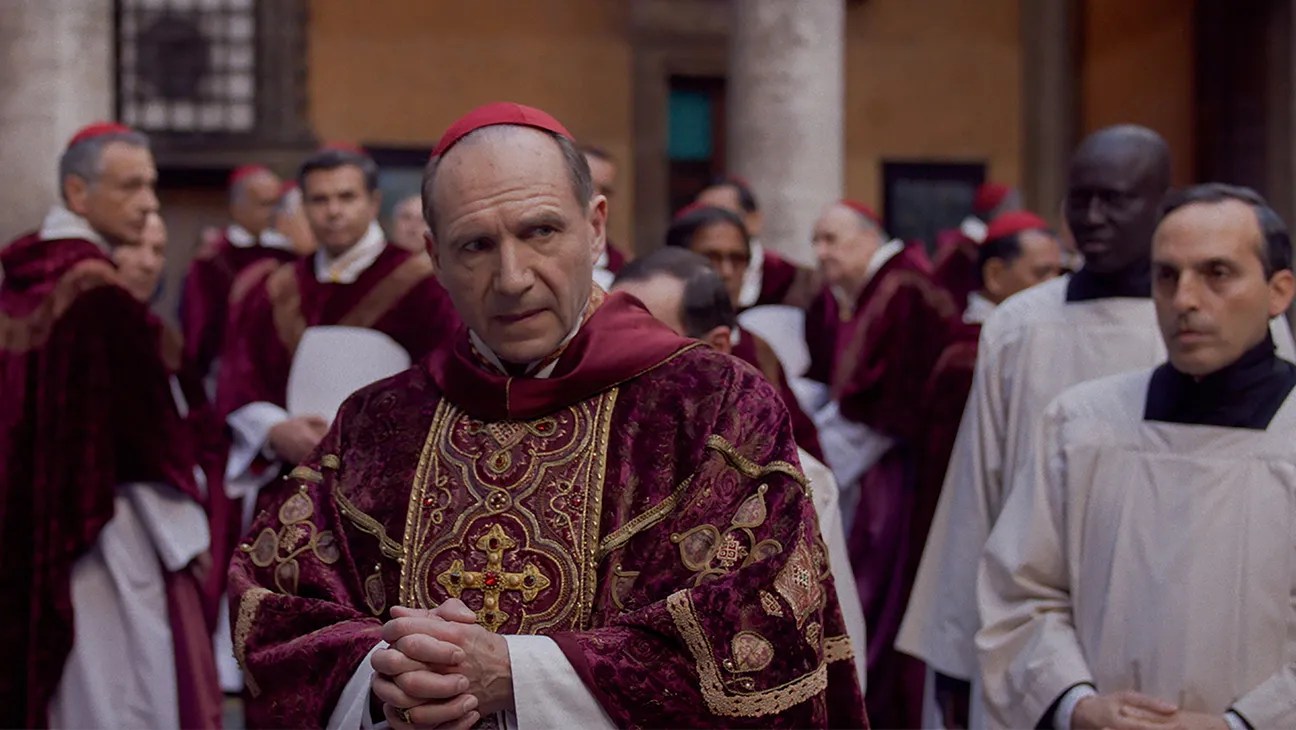
Watching Lawrence have to keep the peace, manage the ebbs and flows of the voting process, and handle moments of upheaval keeps a person invested, especially as shocking reveals take place. It’s the type of flick that can keep an audience on their toes as a complex situation unfolds in dramatic fashion.
In addition to the strong work by Berger and Straughan, credit also has to go to the great cast line-up. Fiennes, Stanley Tucci, John Lithgow, Isabella Rossellini and more are fantastic on screen. The performers here are convincingly able to make the stakes of the voting feel high, as their characters make pushes for power.
Every character’s dedication to the institution, despite whatever issues they may be dealing with, are brought forward nicely by the acting. As a result, the film is able to explore themes ranging from corruption to struggles of faith. Its social commentary is where the film also loses some points, though.
There are several moments in the film where the papal voting process mirrors elements of elections in the U.S. and it’s too on the nose at times. The film centers on an election, so of course there can be a chance for some comparisons between the liberal and conservative wings of the church and our own national politics, but one wishes there was a bit more subtlety.
That, and having a degree of separation as a non-Catholic, takes away from the flick being as fully realized as other dramas about religion. However, it’s still a well-made movie overall with great performances, a strong visual aesthetic and plenty of intrigue to keep a viewer invested. 4.25 out of 5.

 Matthew Liedke on Film
I personally loved this movie. It was definitely a slow burner at times, and I think one or two storytelling elements could’ve been expanded upon, but it is definitely a character driven movie and the ensemble cast do a great job in providing some high-quality performances. Fiennes was excellent in the lead role. Plus, the score was quite phenomenal.
LikeLiked by 1 person