
Amy Winehouse should be remembered for her musical talents and ability to create songs people love. Unfortunately, this biopic decided to focus nearly entirely on her controversies and struggles.
The film picks up with Winehouse, portrayed by Marisa Abela, just before she records her first studio album, “Frank.” The audience learns about her family life, her love of music and how her demo tape has opened a doorway to success.
Following the release of “Frank,” Winehouse begins building her music career and at the same time, starts a relationship with her future husband Blake (Jack O’Connell). From there, the film dramatizes her struggles with alcoholism and addiction, as well as how she pushed forward to make her second and final album, “Back to Black.”
It could be said that “Back to Black” is a fairly standard musical biopic, and that would be somewhat right. However, most films about a musician usually feature some of the artistry behind the performer, showing how they came up with songs or brainstormed ideas. Most also dig into the cultural impact of the musician.
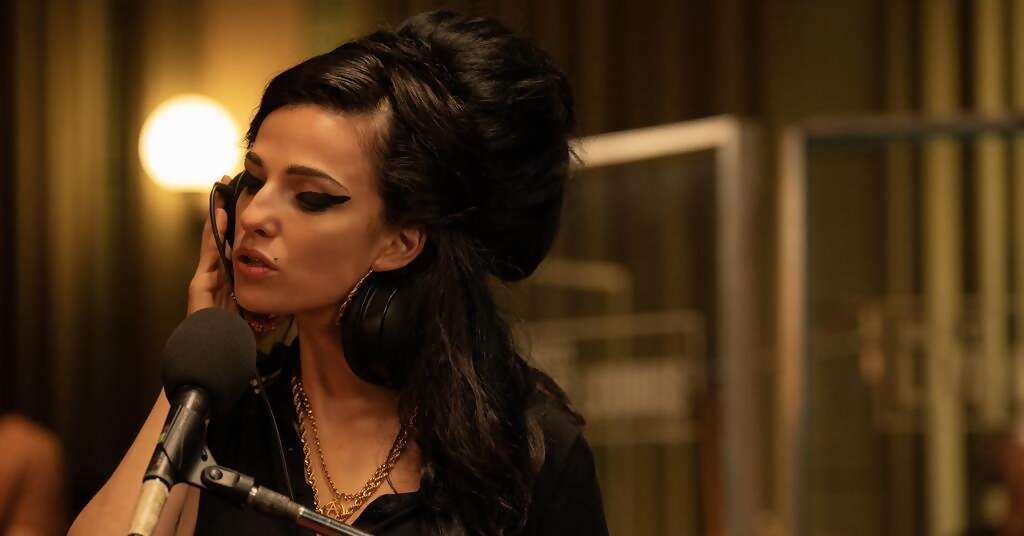
Even the lackluster “One Love” film about Bob Marley from earlier this year did some of this. However, “Back to Black” doesn’t really do so. There’s a sliver of time spent with Winehouse doing some recordings and a few live performances, but it’s just a fraction of the movie.

The majority of the film is spent with the more dramatic events in Winehouse’s life, from her troubled relationship with Blake to her being hounded by the paparazzi and her struggles with substance abuse. It just comes across as exploitative to make this the focus of the film.
It’s understandable that Winehouse’s personal life influenced her music, but with that being the case, the film should have centered more of her writing and creativity in developing her own sound. Instead, what’s offered is a really unflattering portrait of Winehouse where she’s often shown as argumentative, physically abusive and suffering through her alcoholism.
To her credit, Abela makes a tremendous effort to convincingly portray Winehouse on the big screen. She makes the most out of the material and even did the singing in several scenes, which deserves some praise. However, the fact is the material she was given just wasn’t that good.
The supporting cast, though, is less impactful. Jack O’Connell’s Blake feels one dimensional and Eddie Marsan isn’t very convincing at all as Winehouse’s father Mitch. The film also seems to not even dig deep enough into her family life.
Early in the film Winehouse says her mother is having some struggles, but that’s never brought up again. The same is true with her brother who is mentioned but never shows up. It’s just another example of how the film doesn’t provide a well-rounded perspective of the singer.
“Back to Black” is a poor biopic and the film was already a hard sell in the case of this review because I never listened to Amy Winehouse’s music. To those who are unfamiliar with the artist’s work, there’s little reason to see this movie, the same way there was not much of a reason to see the overrated 2015 documentary.
Neither film really gives true insight into the musical talent and cultural impact this singer created, instead focusing so much on the drama of her personal life. It leaves a person unfamiliar with the singer’s work feeling sympathetic, but not much else.
At least the documentary used some real footage and interviews for a deeper portrait of Winehouse, though, rather than this movie which is just a generic dramatization of the singer’s problems. 1 out of 5.

 Matthew Liedke on Film