If a fascist regime ever rises up in the U.S., rest assured Texas and California will put aside their differences and the 2005 Rose Bowl to take it down.
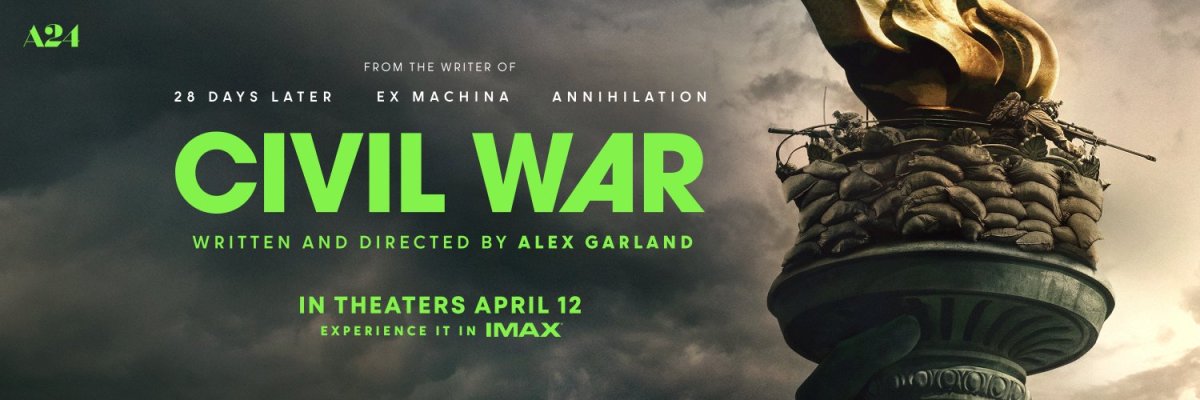
That at least is the interpretation of writer and director Alex Garland in his new film “Civil War.” The film picks up in the near future with California and Texas, known as the Western Forces, marching toward Washington to topple the dictatorial third-term president portrayed by Nick Offerman.
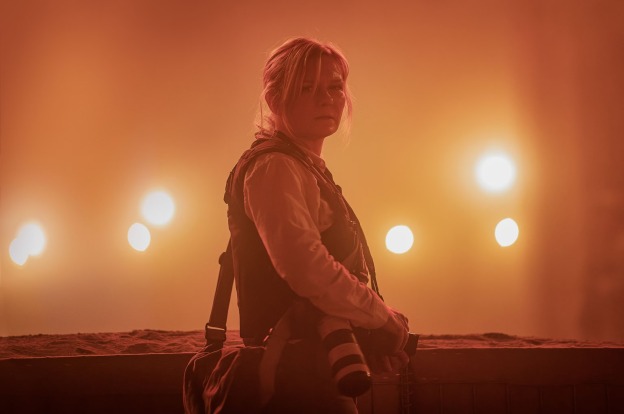
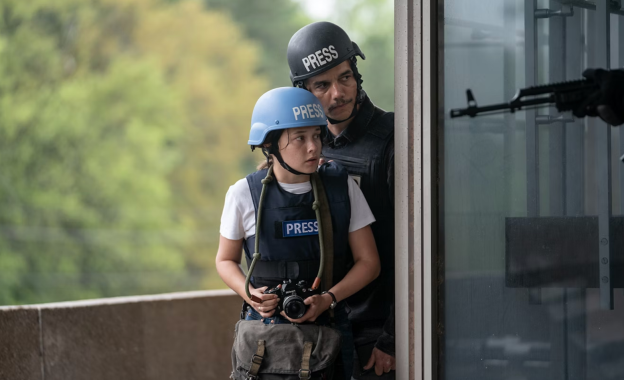
The film centers on Lee Smith (Kirsten Dunst), an experienced photojournalist who’s been to several areas of conflict, and is now reporting on her country’s own inner turmoil. She’s joined by a Reuters reporter, a veteran journalist for the New York Times and a rookie photographer on the way from New York to D.C. to document the war’s ending.
While one might expect a war epic from the film’s title, this movie is much more of a journalism drama set during a conflict. Of course, war is still a major element, and there are several battle scenes, but the movie has its focus squarely on reporting and documenting history by writers and photographers, and even the extreme measures they take to do their jobs.
The film works well enough in that regard, showing the dangers reporters face as they try to record history. Several scenes explore the harrowing efforts made by journalists who have to impartially capture what’s going on, and many of the stills taken by characters that are shown throughout the film are reminiscent of notable, historical photographs that have won Pulitzers.
However, while following around the journalists from place to place on the way to D.C. is compelling enough to follow along with, the film overall feels like it’s lacking a bigger punch. One can appreciate how the film tries to take a grounded, personal look at a war rather than a more macro-level dramatization.
Yet the movie doesn’t really give all that much information about the war itself. In that sense, it doesn’t have all that much to say about the conflict. Even the characters themselves rarely discuss the current events of the world, the politics of the war or what other countries think.
It’s understandable that the moviemakers wanted to leave things somewhat vague, but from having experience in a newsroom, its’ safe to say reporters would be talking about the current happenings pretty extensively. Unfortunately, the audience doesn’t get much insight from them into the greater conflict.
The film does somewhat question what ethical boundaries exist with war coverage in journalism, but that’s about the extent of commentary “Civil War provides. Not much is said beyond that, as the film stays apolitical. I guess there’s also an anti-war point to the film, but at the same time, considering the authoritarian president has led the U.S. to an awful future, it also seems war is kind of necessary in this case?
Regardless, it just doesn’t hit an audience as much when it comes to commentary the same way other dystopian U.S. stories have done. There’ve been plenty of examples of America’s decline or conflict in the country caused by cultural and/or socioeconomic reasons, from the drama series “The Handmaid’s Tale” to genre films like the comedy “Idiocracy” and the thriller franchise “The Purge.”
With “Civil War,” meanwhile, the audience only knows the American government is authoritarian and there’s a resistance force. It might as well be the war in “The Hunger Games” with the Nick Offerman standing in for President Snow.
It’s too bad because the film is no doubt well made. Alex Garland has shown his filmmaking chops before and does so again with intense battle scenes and a bleak atmosphere. There’s certainly some visceral imagery on display, especially battle scenes set in American cities in a present-day time period.
As for the characters, one of the strong points is each of the four main figures is driven both by a dedication to informing the public and the rush of adrenaline that comes with covering events. The acting is quite good across the board, too, although Jesse Plemons ends up stealing the show in the film from the main four in a suspenseful scene he’s in.
A big issue, though, is one of the characters in the movie makes some dumb decisions, almost comparable to a horror movie character that makes the worst type of mistakes. It honestly makes some of the situations frustrating to watch unfold.
In the end, “Civil War” offers some tension, it’s nicely made and the acting is good enough. However, it doesn’t have all that much substance, and the actions of one of the characters can take a viewer out of the moment. 3.25 out of 5.

 Matthew Liedke on Film